Finding Her Way And Finding Her Bike A Rising Canadian Talent & Her Apple Find My Experience
Posted by Andrew Davidson on September 15, 2026

For a cyclist, a trip to distant lands with your trusted steed can feel like a rite of passage. Whether it be for a leisurely bike-cation, a destination race, or a warm-weather training camp, you get to experience all the joys (and stresses) that come with packing up and transporting your two-wheeled adventure partner. Disassembling your whip just enough to pack it away safely in a bike bag, securing it with protective straps and pads, performing a show-and-tell for security at the oversized luggage drop-off, and hoping that it arrives at the same destination as you in one piece - it’s all part of the ritual.
Thankfully, it’s a rather uneventful experience the vast majority of the time: you’re happily reunited with your bike shortly after landing and on your way to explore new roads and trails with friends and teammates. However, if you’ve repeated this process enough times, or know a cyclist who has, you’re inevitably aware of the nightmare scenario where you’re left standing at an empty luggage carousel or oversized baggage gate long after everyone else has claimed their items. “Did my bike not make it onto the flight? Did they put it on the wrong plane? Was it sent to a different luggage claim area?” These are just some of the questions that flood your mind as you try to refrain from spiralling with thoughts of how your meticulously planned trip could now be in ruins if your bike is truly MIA.
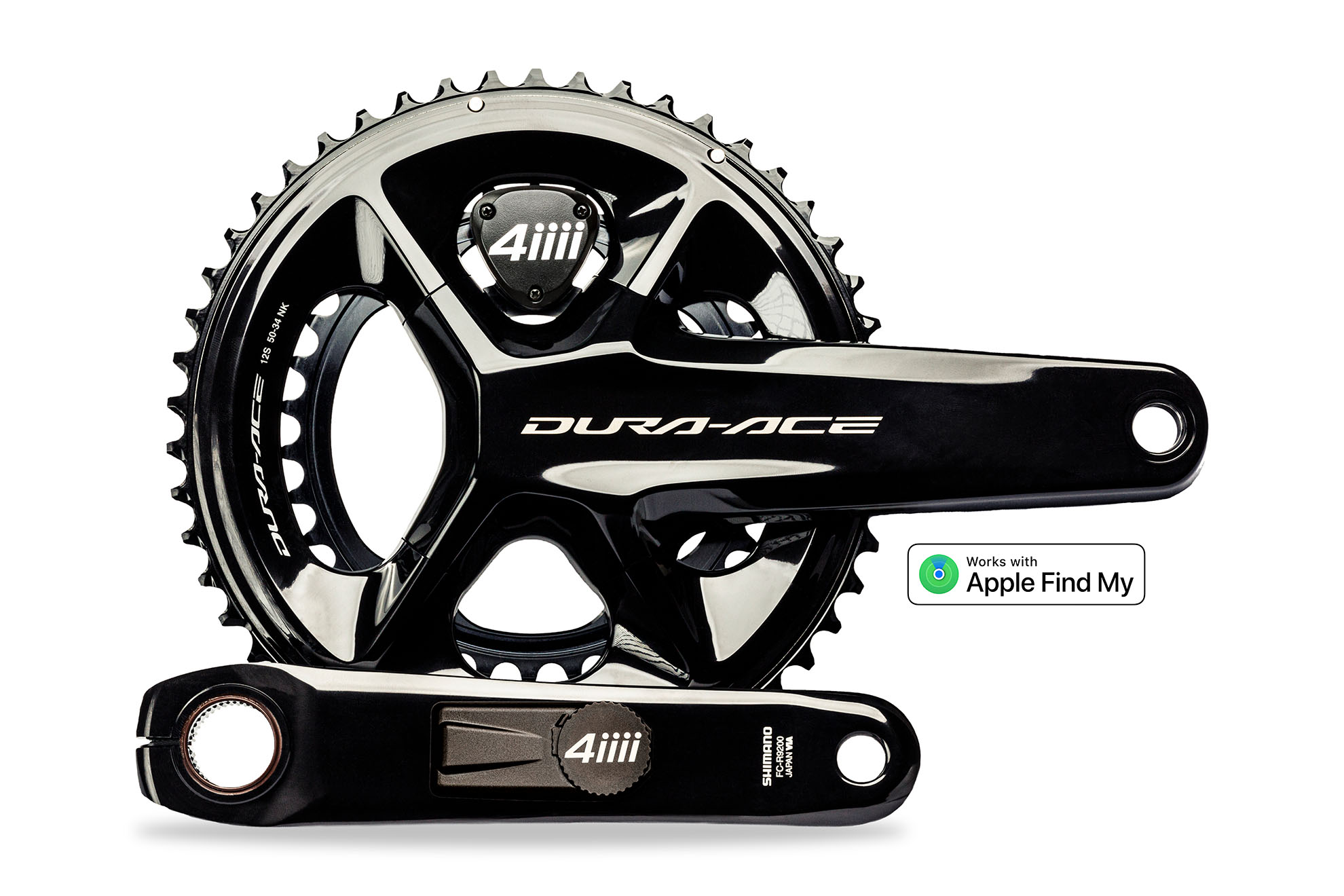
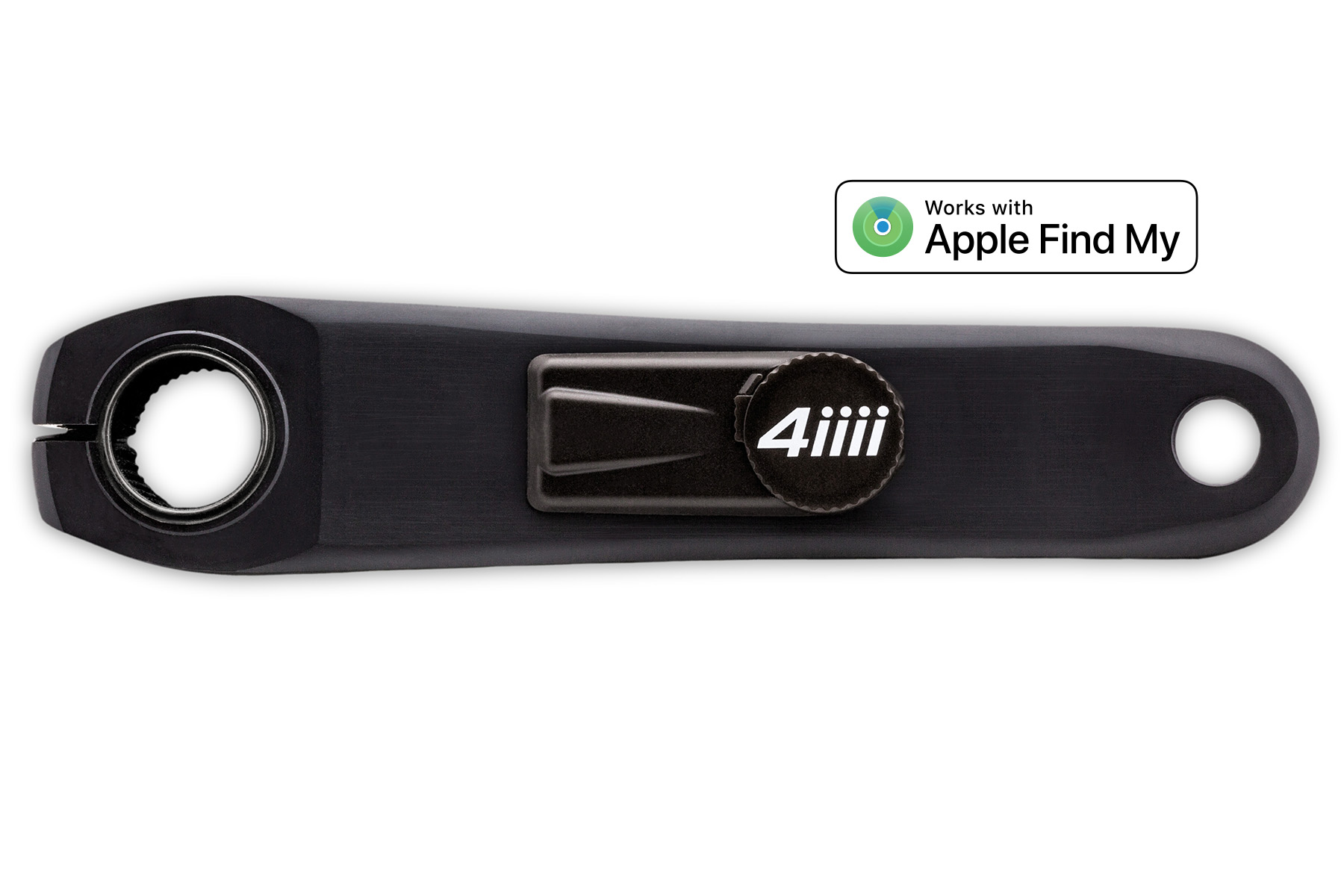
Unfortunately, this was the exact situation young Sophie Chubey, a first-year junior with the Peak Pursuits team, found herself in recently after arriving in Belgium with a squad of young Canadian riders to do a block of European racing. It’s hard to do a bike race without a bike, and the airline proved to be a little lost when it came to tracking her precious cargo. Thankfully, because she rides for a 4iiii-sponsored team, her Cervélo was equipped with a PRECISION 3+ Powermeter, which features Apple Find My technology. This would ultimately save the day and the trip she had so eagerly anticipated! It felt like a perfect opportunity to chat with the up-and-coming multidisciplinary talent about her experiences as a rider and the game-changing tech feature that helped turn around a deflating scenario, as it has for many others.

Sophie, second from the right, and her Peak Pursuits teammates honing crit skills at the Future Champs youth development camp, in Penticton, BC.
Sophie! It might be quicker to list the disciplines you don’t ride or race, but as far as I understand, you currently partake in BMX, Downhill, Cyclocross, XCO MTB, and Road… am I missing any?! You perform well across the board; how do you find riding such a variety of bikes and styles benefiting your overall growth as an athlete?
I also do Enduro! And I LOVE pump tracks too.
I love getting more racing experience in different environments. I’ve learned a lot of bike-handling skills across disciplines, and each transfers to the others. For example, BMX has taught me fundamental skills like racing close to others, cornering, pumping, manualling, jumping, and overall bike-body separation. All of those skills transfer to every other discipline, so I can show up at a road race, navigate a peloton elbow-to-elbow, and hold my ground. I’ve trained for years in Enduro, so I am extremely confident on any course and in any condition in an XC race.
Which discipline did you get into first, and what do you like about each style of riding and racing that’s unique to it?
I started on a Strider at age 2 and pedalled my first bike at 3. Living near a provincial park, my parents spent a lot of time taking me out to the local trails where I could play around and try riding over roots and rocks. I joined Calgary BMX at age 7 along with my brother, as my parents needed a place for my 4-year-old brother to use his “bike energy”—he would drag 2x4s onto the road and try to jump over them! There were no pump tracks at the time, so this was a great spot for us to learn.
At 10 years old, I joined RMCC AMP Enduro in Canmore with Coach Kevin Eaton and met people who are now some of my closest friends. Coach Kevin taught me to be a confident rider, to believe I can do hard things, and gave me excellent technical riding and racing feedback. This is the environment where I really grew into myself as a person and an athlete. I like Enduro because the vibes are pretty chill: I can social-climb with my friends, race a very hard timed descent, and then regroup and do it all over again for the next stage.

Enduro racing, just one of the many disciplines that is rounding out Sophie’s skillset.
I took a few years off BMX, and when I was 14, I decided I missed the sport and was tired of watching my brother race. If I was going to be there watching, I might as well race too! I spent a few weeks practising and raced Nationals in Québec. My goal was to make the Main (the final 8), but I managed to pull off a third-place finish, which surprised me—and everyone else, I think! It was pretty cool to be on the Cycling Canada podium. I’ve been fortunate to be on the podium for the last three years.
Right now, I am racing competitively in BMX, Road, XC, and Enduro.
I wasn’t too sure about road racing until I had the chance to race in Belgium and at the Canadian National Championships, where the pelotons were much bigger. It was super fun to race internationally and meet incredible racers from all over the world. Now I understand the strategy and teamwork and love it! I am really looking forward to working through the strategic side of road racing even more. Also, crits are super fun… kind of like a bunch of BMX races within one race.
Cross-country is like an obstacle course, which I love. Not only does it require a lot of effort, but I get to pick my lines—it’s like a puzzle!

Embracing the muddy nature of an XCO MTB race and keeping the bike handling skills sharp.
You’re a member of the Peak Pursuits cycling team, which is doing an amazing job of mentoring and developing the next generation of female racers in Canada. What are some skills and knowledge you’ve taken away from training and racing with the team?
Peak Pursuits has been a great community. The connections between the younger and older riders are fundamental. The support, mentorship, and overall team environment have been really special. Peak Pursuits has opened so many doors for me to try new things without pressure. The team has also taught me how to find my own opportunities, and I have learned to be more autonomous and confident in what I’m going after.
I train with my teammates every week, and they push me to be much stronger. They motivate me to get faster, and we are all so proud of each other’s efforts and results. We train together and sometimes compete against each other, but the dynamic is always positive and supportive. We celebrate each other’s successes and laugh at our silliness a lot!
Peak Pursuits has created an amazing, stable place for us to learn how to be good people, good athletes, good competitors, and good sportspeople, and to always be thankful to everyone who supports us.

As one of the top BMX racers in Canada in her age group, Sophie is keeping racing fun and varied.
Are there any particular Canadian or international women riders, racers, or moments from any discipline that you look up to or that motivate you?
I have always looked up to Alison Jackson because she knows how to stay locked in to her sport while also being true to herself, and she never lets the atmosphere dictate how she acts. She’s always the one hyping everyone up, and she clearly knows how to dig really deep! I also love that she has a multi-sport background.
I’ve been fortunate to meet so many other professional women and get tips and tricks from them. Everyone really steps in to support each other.

Sophie, second to the left, and her Peak Pursuits squad are leading the way as one of the premier youth women’s team in Canada, and developing the next generation of cycling talent.
You recently completed a stint of racing in Belgium, a fantastic opportunity to gain European racing experience at a young age! Like many of us who’ve travelled by plane with a bike, you experienced the stress of your road bike not arriving when you flew into Brussels. Thankfully, you were able to use the Find My feature on your 4iiii Power Meter to locate it! Can you tell us more about that experience?
I flew to Brussels through Toronto with my bike. Everything was going so smoothly, but once I boarded the plane in Toronto, I checked Find My and saw that the bike was not with me, meaning it hadn’t made it onto the aircraft. I had a nerve-wracking flight to Brussels because I was stressing about landing without my bike!
When we arrived in Belgium, we were stuck in customs for three hours. I checked the Find My app again and saw the bike was still in Toronto. I filled out all the lost-baggage paperwork and got the file started. The baggage agents said they would send my bike to our accommodation once they found it, so I headed to the house with the team, which was about a two-hour train ride away.
The next day, I saw in Find My that the bike had arrived in Brussels, but the airline hadn’t communicated with me. I waited a couple of hours and then called multiple people at Brussels Airport. The first person said, “Your bike isn’t here,” and I responded, “I can see it right there with my Find My!” They connected me to another agent who finally located it. They arranged delivery, and I was able to track it in transit from the airport to our house the entire way!

4iiii’s Apple Find My integration being put to use, as seen in a screenshot of Sophie’s 4iiii power meter/bike (emoji face), being tracked on her phone, as it’s being delivered from the Brussels airport.
What are three big takeaways you have from your European racing experiences over the past two seasons?
-
The sheer number of girls racing in Belgium! They are very aggressive and talented. I am used to racing locally with maybe 10 people, and in Belgium, I was racing against 95 U17/U19 riders midweek. There is so much depth in the sport there.
-
How to survive as an athlete in a different country. This includes navigating language barriers, using public transportation, buying food, planning meals, and getting around on my own.
-
Pack positioning. If you aren’t positioned in the front group continuously, it is too easy to get dropped off the back due to how stretched out and “stringy” the racing gets. I also figured out the best cornering lines, where to stay in the pack on the straights, and where to hide from the wind.
As a relatively new user of a power meter, what aspects of seeing and tracking watts have been the most interesting, fun, and beneficial to you?
I love seeing the actual data from my rides. It’s been really interesting learning to use all the applications and seeing concrete proof of how I am improving. I understand training zones and effort much better than I did before, and I love analyzing how hard I worked during a race in terms of overall intensity and time spent in specific power zones.
I’m also much better at managing my effort on Zone 2 or recovery rides so I don’t tire myself out. Having precise targets makes interval work a lot easier for me too. Going by feel was getting harder as I got faster, I never really knew if I was going too hard or too easy. At this stage in my development, having clear data makes everything come together.

We’re proud to play a small role in developing talented young riders with our training tools, at home and abroad. We wish Sophie continued success, joy, and inspiration in her cycling journey, wherever it may take her! She can continue to enjoy peace of mind on future travels, knowing that wherever she and her bike go, she can keep tabs on her precious cargo using her 4iiii power meter with Apple Find My integration.
If you’d like to keep tabs on your bike during your next destination cycling adventure, while benefiting from the insights of accurate power data, check out our line of options here.